GELATINE
Made from collagen
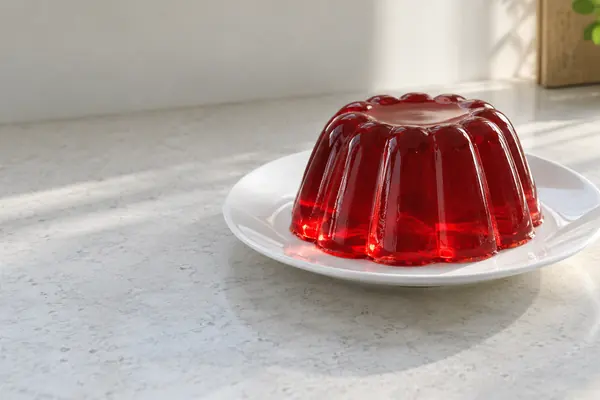
Gelatine comes from collagen, a protein in animal skin and bone. It melts into warm liquid and sets to a gel as it cools.
How it sets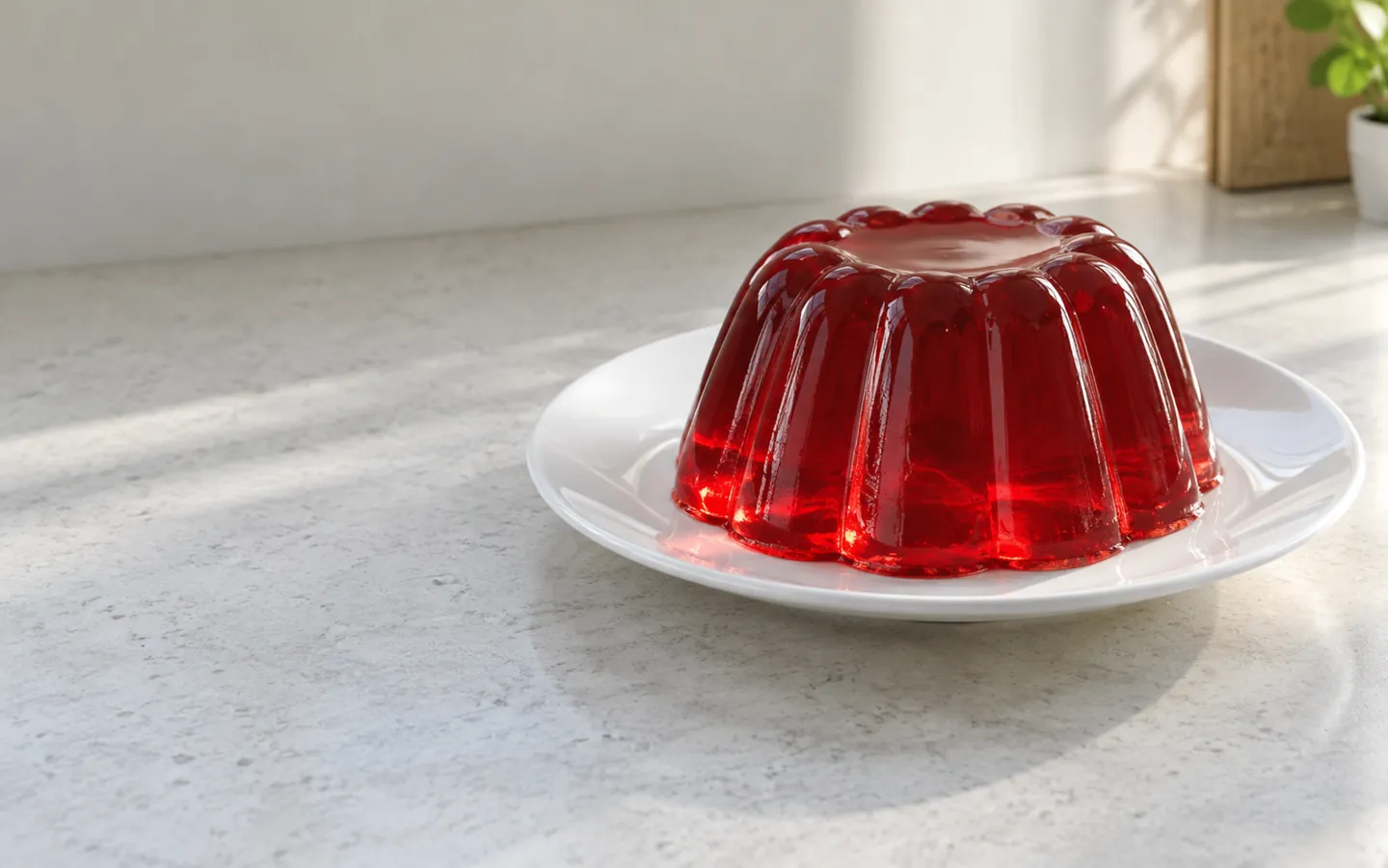
THE KITCHEN SCIENCE
SET IT with a little science
AI-generated image, not a photograph of a real person or place.
Jelly is mostly water, held in a net.
Gelatine's long protein chains tangle up as they cool and trap the liquid around them. Knowing how that net forms explains why some fruits wreck it, and how seaweed can do the same job without any animal protein.
THE SHORT ANSWER
Three facts explain most jelly successes,
and most jelly disasters.
GELATINE
Gelatine comes from collagen, a protein in animal skin and bone. It melts into warm liquid and sets to a gel as it cools.
How it setsFRUIT
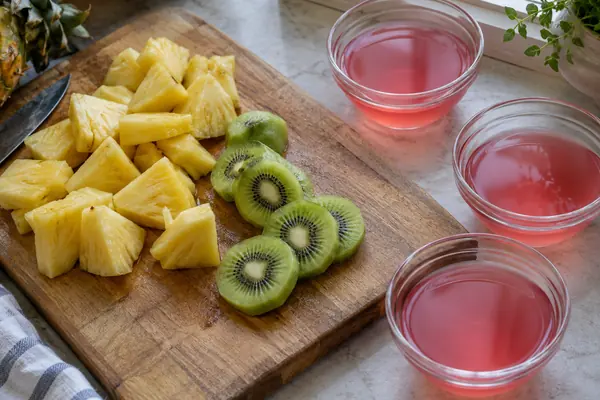
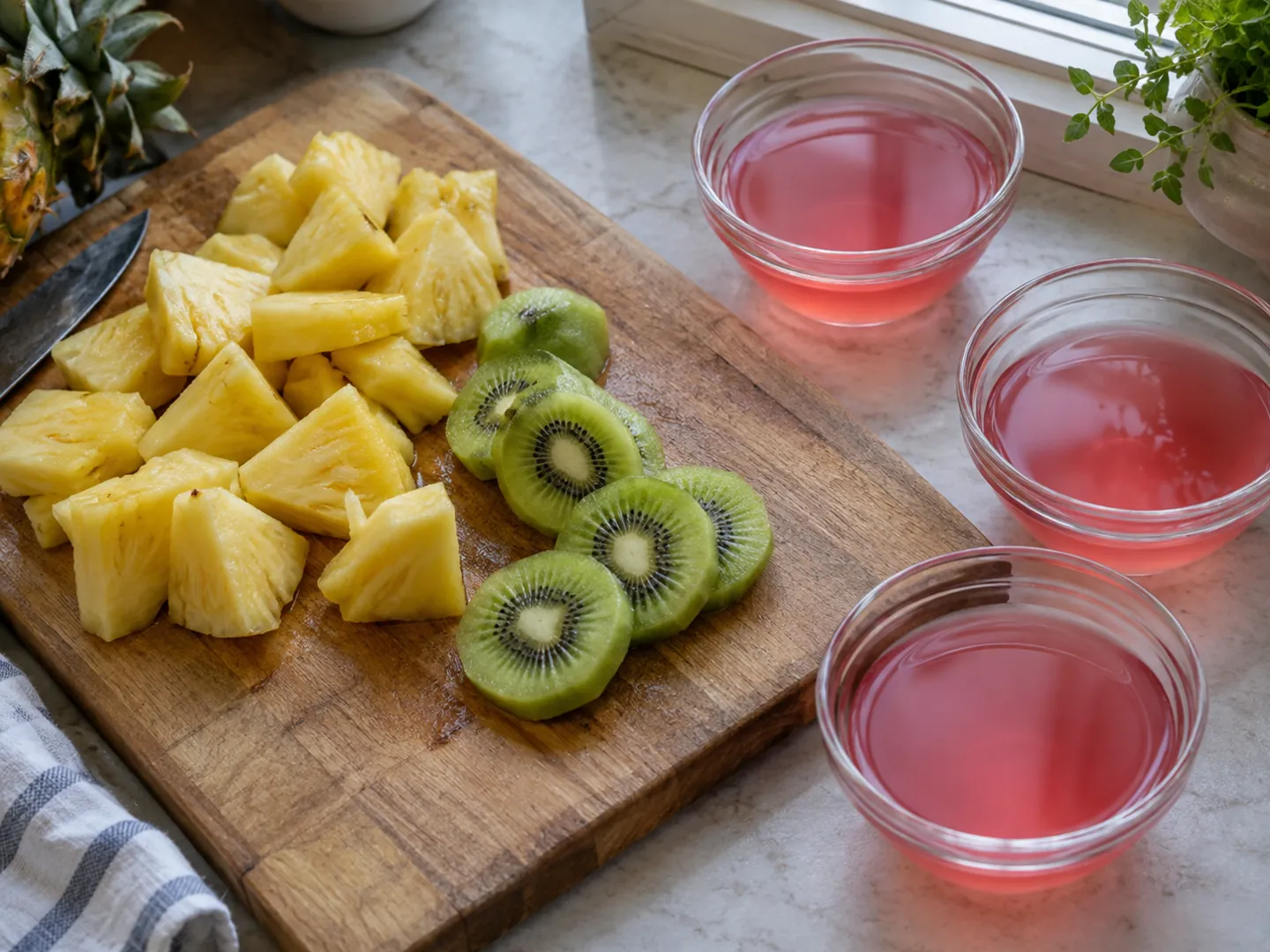
Fresh pineapple contains bromelain, an enzyme that chops gelatine into pieces too short to tangle. Kiwi and papaya do the same.
Check your fruitAGAR
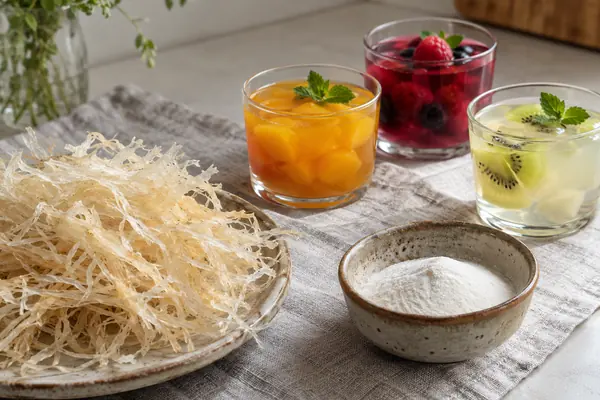
Agar is extracted from red seaweeds such as Gelidium and Gracilaria. It sets firmly and needs far more heat to melt again.
See the numbers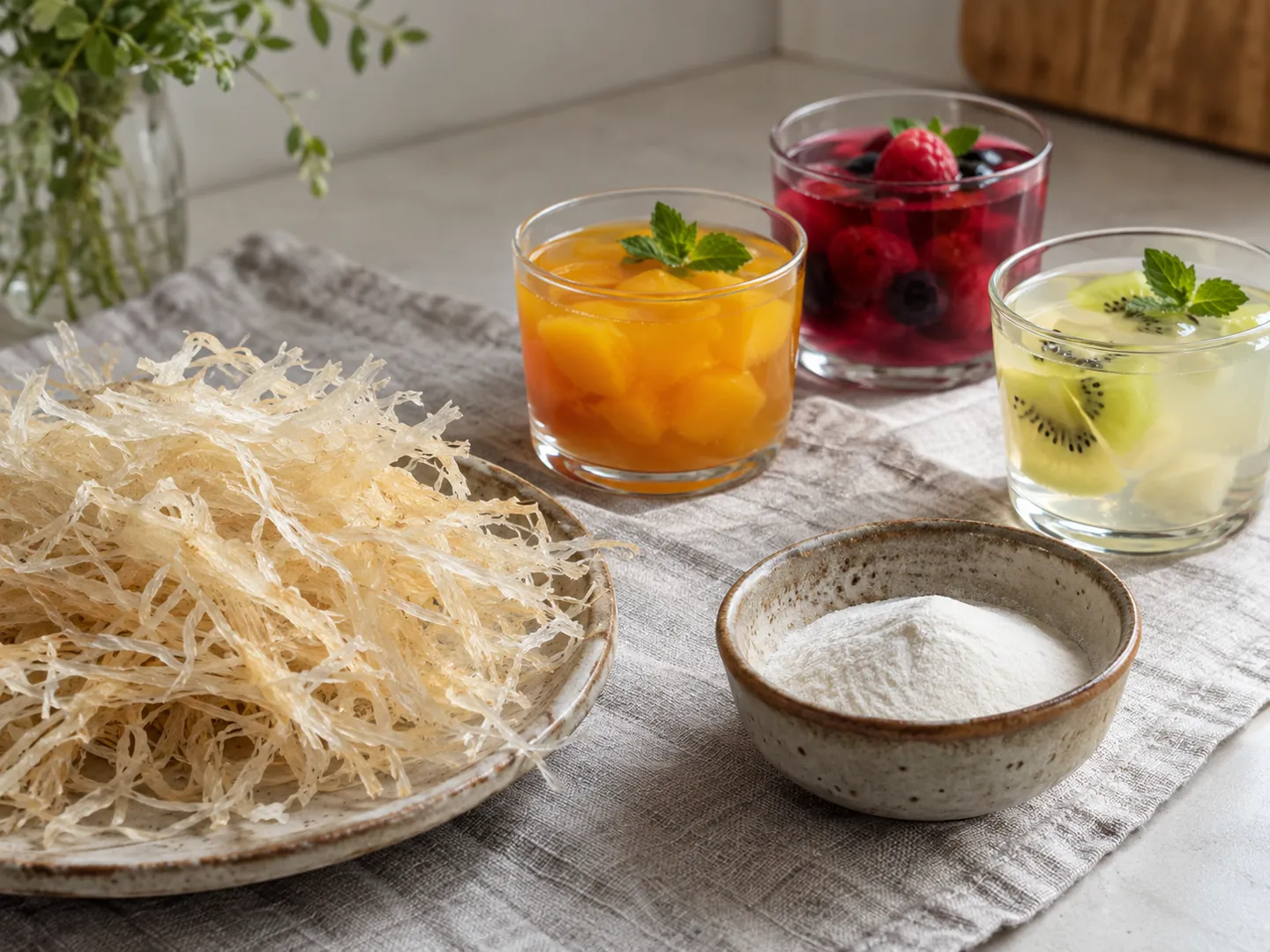
FOUR TIPS FOR A GOOD SET
These come straight from how gelatine and agar behave. None needs special kit.
Canning heat has already denatured the bromelain, so the gelatine can tangle and set.
Freezing leaves the enzymes working, so frozen pineapple, kiwi and papaya still stop gelatine setting.
Gelatine sets as it cools. The Oxford kitchen chemistry guide allows 2 to 4 hours in the fridge.
Agar comes from red seaweed, sets as it cools to around 32 to 39 degrees and does not melt again below 85.
TWO NUMBERS WORTH KNOWING
Two figures from the US Pharmacopeia definition
of agar, tested as a 1.5% gel.
32–39°C
Temperature at which agar congeals
The US Pharmacopeia says a 1.5% agar solution congeals at 32 to 39 degrees. Across different agars the gelling range runs from about 30 to 50 degrees.
SETTING · AGAR AT 1.5%
85°C
Agar gel does not melt below
Once set, the same agar gel does not melt below 85 degrees. Measured melting points across agars range from 82 to 92 degrees.
MELTING · AGAR AT 1.5%
Gelatine works differently: Britannica notes its gel turns back to liquid at higher temperatures. Figures from an FAO manual on processing agar from Gracilaria.
A QUICK FRUIT CHECK
Pick a fruit to add to a gelatine jelly. The bar shows how likely it is to stop the jelly setting.
Based on kitchen chemistry guides from The Naked Scientists and the University of Oxford Department of Chemistry.
INSIDE THE WOBBLE
Gelatine is extracted by boiling animal hides, skins and bones after an acid or alkali treatment. In warm liquid its particles melt into a smooth sol, and as it cools the long protein molecules tangle into a huge intertwined net that traps the water.
That net is a flexible solid, which is why jelly wobbles rather than flows. It is also why protein-cutting enzymes are such a problem: chop the chains short enough and there is nothing long enough left to tangle.
In conversation
Fresh pineapple contains bromelain, a protease that breaks down the gelatine protein. The pieces are too short to tangle into a net, so the jelly stays runny.
Yes. The canning process heats the fruit, which denatures the enzyme. The Naked Scientists say a tinned pineapple jelly will set perfectly.
No. The Oxford kitchen chemistry guide notes that freezing does not denature the enzymes, so frozen pineapple acts like fresh.
Collagen, a protein found in animal skin and bone. Britannica says it is extracted by boiling hides, skins, bones and tissue after an acid or alkali pretreatment, so it is not vegetarian.
Agar, extracted from red seaweeds such as Gelidium and Gracilaria, is a gelling agent used in the food industry. It sets as it cools and needs much more heat to melt again.
Each figure on this page comes from the sources below.
ABOUT THIS NAME
doodlejello.com is part of the DoodleSale portfolio. It isn't in an auction right now, but you can ask about leasing it.